Cormorant Control
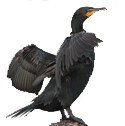
Cormorants nest in large colonies in trees, rocks, cliffs, and man-made structures. They commonly feed near commercial and recreational fishing areas. These birds may contribute to damage to vegetation. Cormorants can strip leaves from trees and break branches. Their accumulated droppings may alter soil chemistry, which can kill trees and shrubs and may contribute to increased erosion. For these reasons, cormorant management may be appropriate in areas where bird activity is causing damage to vegetation or property. These birds are protected by the U.S. Migratory Bird Treaty Act of 1918, and their nests cannot be disturbed once eggs are laid without the appropriate federal authorization.
Preventive bird management measures may be used where permitted by law, and Bird-X cormorant deterrents are non-lethal and are designed to help deter cormorants when used during non-nesting cycles. Bird-X offers a variety of non-lethal cormorant control options to help manage cormorants and shags. For waterfront areas, ponds, marinas, and other locations where cormorants and shags are present, the Gator Guard is a visual deterrent that combines the movement of water and wind to simulate natural motion. If the water contains fish, however, birds may be less responsive to visual deterrents alone; in these situations, Gator Guard may be used in combination with a sound unit, such as the HeronBuster or BirdXPeller PRO.
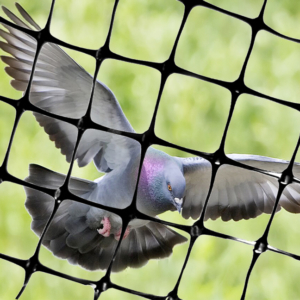
For complete physical exclusion, placing bird netting over the water can physically block bird access to the water. Bird netting is commonly used at fisheries, aquaculture facilities, and other managed water areas. Floating Bird Balls are another physical barrier option for bodies of water such as retention ponds and lakes. These balls help discourage waterfowl, including cormorants and shags, by covering the water’s surface and reducing available landing areas. The balls allow sunlight to reach the water, helping maintain the water’s ecosystem. The continuous movement of the balls on the water’s surface may help reduce the accumulation of algae and other organic material.
In trees, on cliffs, or in large open areas, safety concerns may prompt cormorant management efforts, especially for businesses concerned about property use, customer complaints, or operational disruptions. Bird-X sound units are designed to help deter cormorants in large, open spaces and can be used as part of an integrated bird management program
For dark, enclosed spaces such as warehouses and garages, the Bird-X Laser collection is designed to help deter cormorants using moving laser light patterns, without relying on sound. Laser units are intended for use in dark spaces where the laser light can reflect off surrounding surfaces.
Bird-X Products
Heron Buster®
Covers up to 7 acres
The HeronBuster is a heron-specific version of the GooseBuster® PRO sound unit, designed for heron deterrence.
It broadcasts authentic bird distress calls and predator cries. The alert call is designed to signal a potential threat, and the alarm call is intended to indicate an increased threat response.
BirdXPeller ® Pro
Covers up to 1 acre.
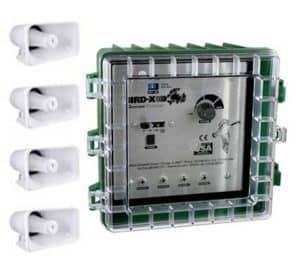
The BirdXPeller® PRO helps deter pest birds by emitting a variety of naturally recorded distress calls and predator cries that are designed to discourage birds from frequenting treated areas.
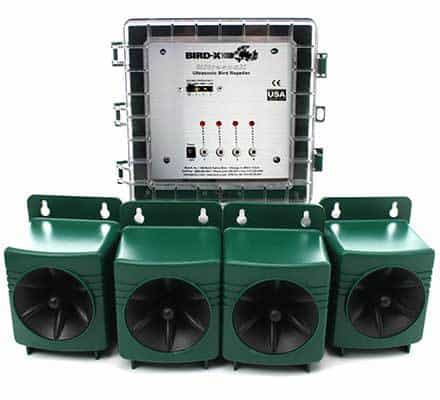
Bird Netting
Bird Netting creates a physical barrier. It is a bird exclusion solution that prevents pest birds from entering areas where they are not desired.
- Designed to provide bird exclusion when properly installed in appropriate locations.
- Discreet— low-profile and silent, with no power supply required.