GOOSE REPELLENTS AND DETERRENTS
Common Problems Associated with Pest Geese:
What’s the Difference Between “Distress,” “Alert” and “Alarm” Calls on Sonic Goose Repellents?
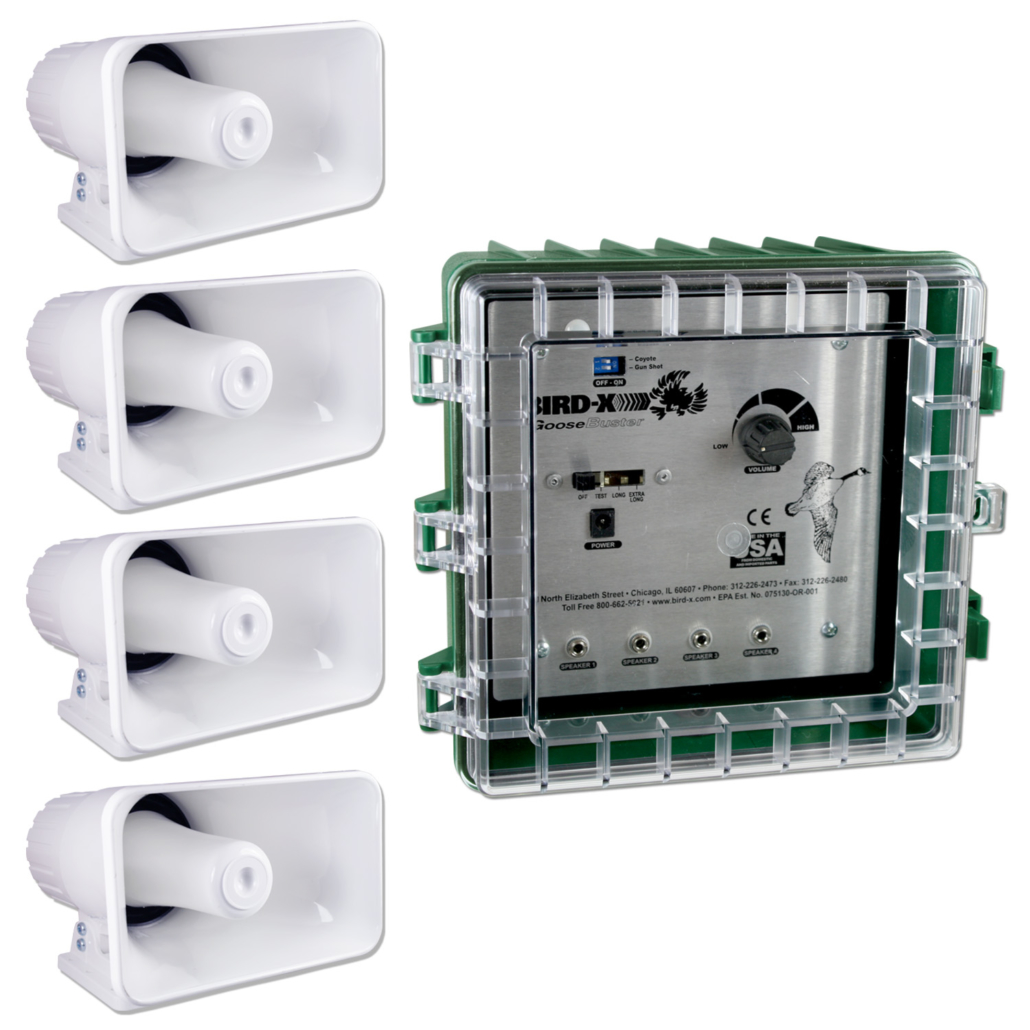
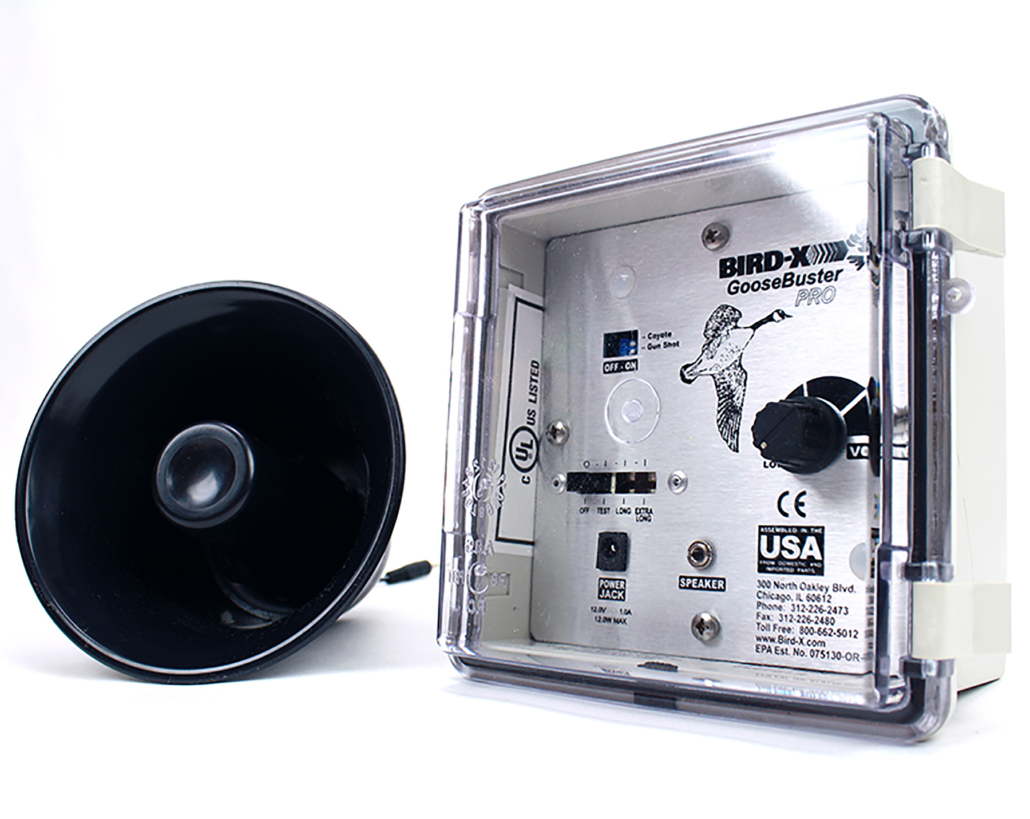
Dr. Whitford’s studies over the years have shown that the realistic nature of alarm and alert calls can help support bird deterrent efforts. The use of natural bird sounds is designed to replicate communication signals that may influence bird behavior and encourage birds to seek alternative areas. The Bird-X GOOSEBUSTER is the only sonic goose repellent available that reproduces these sounds.
Testing has shown considerable variation in initial goose reaction to alarm-call geese control products, from instant and total departure to a nervous response and threatened behavior without evacuation. Results depend on past experience of geese, length of residency and season. For specific information about Canada Goose nesting habits and seasonal behavior, download our helpful Calendar of the Goose.
Bird Stop® is our best-selling liquid aversion product designed to help discourage geese from grazing on treated areas. The active ingredient in Bird Stop® liquid is methyl anthranilate, a derivative of concord grapes. Methyl anthranilate has a taste and smell that birds may avoid due to its effect on their trigeminal systems, helping to discourage feeding activity in treated areas. Bird Stop® is designed for use as a bird deterrent when applied according to label directions.
Floating Bird Balls are goose deterrent products designed to help reduce waterfowl access to airport retention ponds and other bodies of water. These balls provide up to 99% surface coverage, creating a physical barrier that helps discourage waterfowl from landing on the water’s surface. The balls allow sunlight to reach the water while helping support water management efforts. Continuous movement on the water’s surface can also help reduce buildup of debris and vegetation on the balls.